How Does God's Covenant with Israel Follow Ancient Treaty Formats?
God’s Covenant/Treaty Structure with Israel
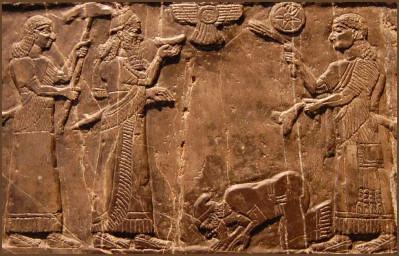
God's covenant/treaty with Israel was set forth in a form common in the ancient Near East, a format known as a Suzerain-Vassal Treaty. In these treaties, the "suzerain," or superior ruler, promised blessings for loyalty and obedience, and curses for rebellion. We can find archaeological evidence for these treaties in modern-day Turkey, which was once the home to the Hittite Empire. God speaks to humanity in terms we can understand. If He were to speak in heavenly terms we most likely would not understand. So He speaks to us in earthly terms (John 3:12). God uses this same treaty structure when He makes a covenant with Israel, because they will understand it.
The Sinai covenant reflects the pattern of the ancient Near Eastern suzerain-vassal treaty, particularly the Hittite treaty of the second millennium BC. In this kind of covenant, the suzerain (or ruler), such as a king or a superior, provides the stipulations of the covenant to the vassal who is the subject. The suzerain (ruler) offers blessings in return for the vassal's obedience and curses for failure to obey the covenant's stipulations. The pattern of the suzerain-vassal treaty with its parallel sections in Exodus can be outlined as follows:
The preamble: which identifies the initiator and recipients of the covenant (Exodus 20:2 "I am the LORD your God").
The historical prologue which recounts the past relationship between the parties (Exodus 20:2, "who brought you out of the land of Egypt, out of the house of slavery").
The stipulations to maintain the treaty (Exodus 20:3 - 23:19; 25:1 - 31:18).
The witness to the treaty (Exodus 29:46; 31:13, "I am the LORD their God").
The Document clause: provisions allowing the writing of the document for future learning and reading (Exodus 24:4, 7, 12).
God had already made unconditional promises to Israel prior to them entering the Mosaic covenant with Him. The Israelites were granted land as a perpetual possession (Genesis 15:7-18). God also promised that Israel would be a perpetual people unto Him (Genesis 22:17-18; Deuteronomy 7:6-8).
The Mosaic covenant adds various conditional promises to these previously granted unconditional promises. A conditional promise depends on both parties for its fulfillment. Of course, God can always be depended upon to keep His end of the bargain. The open question is whether Israel will honor its end of the covenant. God will clearly spell out to Israel the consequences for disobedience, as well as the blessing for obedience.
In a conditional covenant, both parties make promises under oath to perform or to hold back certain actions. If one party fails to meet its obligations, the covenant is then broken. Thus, in the Sinai covenant—established between Yahweh and Israel—the obligations (covenant stipulations) are clearly spelled out and summarized in Exodus 19:4-6,
"You yourselves have seen what I did to the Egyptians, and how I bore you on eagles' wings, and brought you to Myself. Now then, if you will indeed obey My voice and keep My covenant, then you shall be My own possession among all the peoples, for all the earth is Mine; and you shall be to Me a kingdom of priests and a holy nation." (Exodus 19:4-6)
The first part of this statement sets forth the reality of God's love for His chosen people in redeeming them out of slavery. The second part describes the basic agreement: if Israel will obey, they will be blessed. They will be a special priestly nation, demonstrating to their neighbors how to live constructively, in a "love your neighbor" culture rather than the "strong exploit the weak" culture of the surrounding pagan nations (Leviticus 18). Many of the blessings that stem from the Mosaic covenant are practical in their benefit. For example, it is much more beneficial to live in a community where no one steals or harms than to live in a neighborhood filled with violence.
It is made clear in this conditional covenant that Israel has a free choice whether to obey or not obey, and it will be they who determine whether they gain the conditional blessings. The unconditional blessings will continue notwithstanding their choices. Israel chose to enter into the covenant with God, as stated in Exodus "All the people answered together and said, 'All that the Lord has spoken we will do!'" (Exodus 19:8a)
A unique distinction in the Suzerain-Vassal treaty between God and Israel was that God made His treaty with the people rather than with a king. In Exodus 19:7-8, we see Moses offer God’s treaty covenant to the people and they accept the terms. Deuteronomy is the second giving of the treaty, properly thought of as a restatement and amendment of the original treaty the people agreed to in Exodus.
We can see the treaty structure, which sets forth the requirements of the Suzerain (God) and the blessings for honoring those requirements, as well as the enforcement provisions for breaking the covenant/treaty. The blessings and enforcements (cursings) are set forth in Deuteronomy 28. The covenant was re-entered into in Deuteronomy 29:10 as God again addresses “all of you” meaning all the people. In God’s treaty structure, the people reported directly to Him—He was their king (1 Samuel 8:7).
Another unique distinction is that in God’s treaty with Israel, their “tribute” to Him was to love Him and love one another. Jesus said that these two commands are what the entire Law stands for, as well as the prophets (who exhort the people to follow the Law and avoid the enforcement provisions of the treaty).
God’s covenant treaty was set forth in order to bless the people. God’s stated objective in entering this treaty was for Israel to serve a priestly function and show the other nations that a self-governing culture based on a love-your-neighbor ethic produces human flourishing. The pagan way of “strong exploit the weak” produces human misery.
As we see from Deuteronomy 9:7, the first generation out of Egypt lived in constant rebellion against the terms of their treaty. In 2 Kings 17:7-23, we see that the Assyrian conquest of the northern kingdom of Israel was an enforcement of the covenant. Similarly, 1 Chronicles 9:1 asserts that Judah was exiled to Babylon “for their unfaithfulness” to their covenant promise to honor God’s commands. Some specific enforcement provisions that describe being conquered and exiled can be found in Deuteronomy 28:37, 41, 49, 52, 64.
How Rebellion Works in a Suzerain-Vassal Treaty
A means to understand the suzerain-vassal treaty format is to observe what happens when it is broken. The treaty form is built around obligations that run in both directions, and the most visible obligations of the vassal are to 1) pay the agreed tribute, and 2) remain loyal to the suzerain by refusing to enter treaties with the suzerain's rivals. When the vassal stops paying tribute, or when the vassal pivots toward a rival power, the treaty has been broken from the vassal's side. The vassal has rebelled against the suzerain and broken the treaty.
The suzerain's response is enforcement of the treaty; typically that means military action against the vassal. The Bible records this pattern with consistency.
Biblical Examples of Human-to-Human Vassal Rebellions
Following are some examples in scripture where a Suzerain-Vassal treaty structure is inferred. The common pattern is that an inferior king “rebels,” meaning they stop paying tribute, and the superior king attacks to enforce the treaty. The basic idea is “If you don’t pay me some, I will come take it all.”
1. The Genesis battle of the five kings of the plain against Chedorlaomer (Genesis 14:1-4). The kings of Sodom, Gomorrah, Admah, Zeboiim, and Bela "had served Chedorlaomer twelve years, but in the thirteenth year they rebelled." Twelve years of compliance followed by a joint refusal to keep serving the Elamite suzerain.
2. Moab against Israel under Ahab, then Jehoram (2 Kings 1:1 and 3:4-5). “After the death of Ahab, Moab rebelled against Israel." Mesha, king of Moab, "used to pay the king of Israel 100,000 lambs and the wool of 100,000 rams" as annual tribute. When Ahab died, Mesha stopped paying.
3. Edom against Judah under Jehoram (2 Kings 8:20-22). "In his days Edom revolted from under the hand of Judah, and made a king over themselves." Edom had been a Davidic /Solomonic vassal since 2 Samuel 8:14 and1 Kings 11:14-22.
4. Libnah against Judah. This is the same campaign in 2 Kings 8:22. "Then Libnah revolted at the same time." A second tributary city seizing the moment when Judah's grip slipped.
5. Hoshea against Shalmaneser of Assyria (2 Kings 17:3-4). The text records both halves of the rebellion: "He had sent messengers to So king of Egypt and had offered no tribute to the king of Assyria, as he had done year by year." This is an example of a tribute default accompanied with a pivot to a rival suzerain (superior king). The idea here is “I can get a better deal from this protector” (which could be a perception of better protection or cheaper tribute).
6. Hezekiah against Sennacherib of Assyria (2 Kings 18:7). "He rebelled against the king of Assyria and did not serve him." Verse 14 makes the tribute frame explicit when Hezekiah later sues for terms: "I have done wrong. Withdraw from me; whatever you impose on me I will bear." Hezekiah subsequently paid a huge sum, which was received by the Assyrians, but they continued to press the attack.
7. Jehoiakim against Nebuchadnezzar of Babylon (2 Kings 24:1). "In his days Nebuchadnezzar king of Babylon came up, and Jehoiakim became his servant for three years; then he turned and rebelled against him." This is an example of three years of vassal compliance followed by a treaty break.
8. Zedekiah against Nebuchadnezzar of Babylon (2 Kings 24:20,2 Chronicles 36:13,Jeremiah 52:3,Ezekiel 17:13-19). A symbolically rich rebellion in the Old Testament. Nebuchadnezzar had placed Zedekiah on Judah's throne under oath (2 Chronicles 36:13: "He also rebelled against King Nebuchadnezzar who had made him swear allegiance by God"). Zedekiah took the oath, then sent envoys to Egypt for horses and troops, then withheld tribute. The LORD treats the broken vassal oath as a covenantal offense in its own right (Ezekiel 17:18-19), even though the suzerain was a pagan king.
9. Solomon's house—Hadad of Edom (1 Kings 11:14-22) and Rezon of Damascus (1 Kings 11:23-25). Both are framed as adversaries the LORD "raised up" against Solomon. Neither passage uses "rebel" as the headline word, but both are vassal dissenters from the Davidic suzerainty.
10. The northern kingdom against the house of David under Rehoboam (1 Kings 12:16-19). The ten northern tribes refuse Rehoboam's terms and declare independence: "What portion do we have in David? We have no inheritance in the son of Jesse." Verse 19 makes it official: "So Israel has been in rebellion against the house of David to this day."
In every case the pattern is the same. A lesser king has entered a treaty with a greater king on terms that involve continued tribute and exclusive loyalty. The lesser king either stops paying or pivots to a rival, and the greater king brings his army. This is what biblical vassal rebellion looks like at the ordinary political level.
When the Suzerain Is God
The Sinai covenant is itself a suzerain-vassal treaty. The LORD assumes the role of Suzerain. Israel is the vassal nation. The historical prologue is the Exodus from Egypt ("I am the LORD your God, who brought you out of the land of Egypt, out of the house of slavery,"—Exodus 20:2). The stipulations are the Law given through Moses.
The blessings for loyal obedience and the cursings for breaking the treaty are catalogued at length in Deuteronomy 28. Heaven and earth are called as the witnesses (Deuteronomy 30:19, 32:1). The treaty is to be housed in the ark of the covenant and read aloud at fixed intervals (Deuteronomy 31:9-13, 26).
In God’s treaty, He makes it directly with the people (Exodus 19:8). The treaty requires Israel to pay tribute and exercise loyalty by keeping God’s commands to love Him and love one another. They are required to keep the stipulations of the Law and maintain exclusive worship of the LORD. And Israel must refuse to enter parallel treaties with rival powers—the surrounding kings and their gods.
The Old Testament records Israel's failure on both counts in great detail, and the language the prophets use is that of political vassal rebellion:
"Sons I have reared and brought up, but they have revolted against Me" (Isaiah 1:2).
"Like Adam they have transgressed the covenant; there they have dealt treacherously against Me" (Hosea 6:7).
"Put the trumpet to your lips! Like an eagle the enemy comes against the house of the LORD, because they have transgressed My covenant and rebelled against My law" (Hosea 8:1).
The prophets use a form of suzerain treaty lawsuits in their indictments against Israel.
Isaiah 1:2-4 calls heaven and earth as witnesses—a standard treaty witness formula—and reads out the indictment.
Micah 6:1-8 commands the mountains and the enduring foundations of the earth to "hear the indictment of the LORD."
Jeremiah 2 walks through historical prologue ("I remember concerning you the devotion of your youth"), formal complaint ("What injustice did your fathers find in Me, that they went far from Me?"), and bill of particulars ("they have forsaken Me, the fountain of living waters, to hew for themselves cisterns, broken cisterns that can hold no water").
Hosea, Amos, Zephaniah, Malachi, Daniel, and Nehemiah work in this same form.
In 2 Kings 17, the chapter opens with Hoshea's political vassal rebellion against Shalmaneser. But after Samaria falls in verse 6, the writer stops the narrative and inserts the LORD's own indictment of the northern kingdom (vv. 7-23).
And the second indictment is written in the same shape as the first. Hoshea broke faith with Assyria; Israel broke faith with the LORD. Hoshea stopped paying tribute and pivoted to Egypt; Israel stopped keeping the stipulations and pivoted to other gods. Shalmaneser enforced; the LORD enforced—and used Shalmaneser as the rod of His enforcement (compare 2 Kings 17:18 andIsaiah 10:5-15).
The structural argument of 2 Kings 17 is that the kingdom-to-kingdom political rebellion was a manifestation of the deeper covenantal rebellion of Israel against God. Hoshea's defection to Egypt was like Israel's defection to her false gods; it was defection made visible in the political arena.
Another episode demonstrates another breach in an opposite direction. Zedekiah's oath to Nebuchadnezzar was a human suzerain-vassal contract, sworn under the LORD's name, and the LORD held Israel accountable for breaking it as if Israel had broken faith with Him (Ezekiel 17:18-19). The LORD takes earthly oaths sworn in His name with full seriousness. Part of God’s covenant with Israel is to keep your word with others (Exodus 20:16).
What the LORD Actually Required from His Vassal
In thinking about parallels, an important question is: “If the LORD is the Suzerain, what is the equivalent of tribute in the treaty structure?”
An earthly suzerain extracted tribute such as silver, gold, livestock, grain, garments, and manpower for the suzerain's own enrichment and the maintenance of his court and army. Shalmaneser's interest in Hoshea was material. Nebuchadnezzar's interest in Zedekiah was material. The tribute flowed from the vassal nation up to the suzerain nation, and the suzerain consumed it.
The LORD does not work this way. He says so directly. "If I were hungry I would not tell you, for the world is Mine, and all it contains" (Psalm 50:12). "For every beast of the forest is Mine, the cattle on a thousand hills. I know every bird of the mountains, and everything that moves in the field is Mine" (Psalm 50:10-11). The Suzerain who owns everything has no need to extract anything. The treaty He cuts with Israel therefore does not run on extraction. The purpose of His treaty is actually to seek the best interest of the vassal.
In the Sinai covenant, the LORD redirected the tribute downward and outward; you “pay” God “tribute,” so to speak, by serving others. The vassal nation does not pay the Suzerain. The vassal nation pays in the way the Suzerain has chosen to be honored, which is by loving Him through loving the people and stewarding well the land He has placed under their care. Following are five specific requirements in God’s covenant law that fulfill a tribute equivalent in a human-to-human suzerain-vassal treaty:
Pay the Levites through the tithe. The tithe of the produce of the land and the increase of the herd does not flow up to a divine treasury. It flows to the tribe that has no land inheritance, and through that tribe to the maintenance of the worship that re-centers the whole nation on the Suzerain,
"To the sons of Levi, behold, I have given all the tithe in Israel for an inheritance, in return for their service which they perform, the service of the tent of meeting." (Numbers 18:21-24,Deuteronomy 14:22-29)
God then expands the tithe to include the once-every-three-years tithe held back inside the gates for "the Levite, because he has no portion or inheritance among you, and the alien, the orphan, and the widow who are in your town." The Suzerain has converted His tribute into a sustenance system for the landless and those dedicated to maintain worship and gatherings of national fellowship.
Honor the poor. The LORD's covenant/treaty stipulations include detailed protections for the poor that human treaties would not contemplate.
"You shall generously give to him, and your heart shall not be grieved when you give to him, because for this thing the LORD your God will bless you in all your work" (Deuteronomy 15:10).
Loans to the poor are not to bear interest (Exodus 22:25,Leviticus 25:35-37); the cloak taken in pledge is to be returned by sunset because "it is his only covering; it is his cloak for his body. What else shall he sleep in?" (Exodus 22:26-27).
The harvest is to be reaped in such a way that the corners and gleanings are left for the poor and the sojourner: "Now when you reap the harvest of your land, you shall not reap to the very corners of your field, nor shall you gather the gleanings of your harvest. Nor shall you glean your vineyard, nor shall you gather the fallen fruit of your vineyard; you shall leave them for the needy and for the stranger" (Leviticus 19:9-10, 23:22; Deuteronomy 24:19-22).
The sabbatical year cancels debts (Deuteronomy 15:1-11). The jubilee returns land to families who have lost it (Leviticus 25:8-17, 23-28). The treaty's stipulations on the poor are detailed, sustained, and unmistakable.
Love the neighbor as yourself. The summary statement is given in Leviticus 19:18 — "you shall love your neighbor as yourself; I am the LORD" — and is extended in the same chapter to the resident alien: "The stranger who resides with you shall be to you as the native among you, and you shall love him as yourself, for you were aliens in the land of Egypt; I am the LORD your God" (Leviticus 19:33-34).
The first half of the Ten Commandments speak of loving God, and the second half tell how God expects us to express love of Him by loving others. Jesus reads it exactly this way in Matthew 22:37-40, naming Deuteronomy 6:5 (love the Lord) and Leviticus 19:18 (love your neighbor) as the two commandments on which "the whole Law and the Prophets" depend.
Care for the land through sabbath rest. The sabbath in the Sinai covenant is not only weekly. It is also a stipulation for the land itself,
"Six years you shall sow your field, and six years you shall prune your vineyard and gather in its crop, but during the seventh year the land shall have a sabbath rest, a sabbath to the LORD." (Leviticus 25:1-7,Exodus 23:10-11)
The poor are explicitly named as beneficiaries of that fallow year: "and let the needy of your people eat" (Exodus 23:11). The treaty makes the land itself a beneficiary of the vassal's obedience. 2 Chronicles 36:21 notes that the seventy-year exile is God’s collection of the unobserved sabbath rests Israel had refused to grant it.
Exercise impartiality, do justice, love mercy. The judicial stipulations of the covenant insist that the Suzerain's courts are not to be a place where money or status decides outcomes.
"You shall do no injustice in judgment; you shall not be partial to the poor nor defer to the great, but you are to judge your neighbor fairly" (Leviticus 19:15).
"You shall not show partiality in judgment; you shall hear the small and the great alike. You shall not fear man, for the judgment is God's" (Deuteronomy 1:17).
The prophets later distill this stipulation in concise terms:
"He has told you, O man, what is good; and what does the LORD require of you but to do justice, to love kindness, and to walk humbly with your God?" (Micah 6:8)
Hosea prophesies a line that Jesus will quote twice in the gospels: "For I delight in loyalty rather than sacrifice, and in the knowledge of God rather than burnt offerings" (Hosea 6:6; quoted by Jesus in Matthew 9:13 and 12:7).
The LORD's "tribute" is to be the lived honoring of Him by the way Israel handled her neighbors and her land. To love Him was to love them. To break faith with Him was, at ground level, to break faith with them—to withhold the tithe from the Levite, to grind the face of the poor, to lend at interest, to harvest the corners, to deny the land its sabbath, to take bribes in court, to defer to the great and crush the small.
This is why Isaiah 1, Jeremiah 7, Amos 2-5,Micah 6, Zephaniah 3, and Malachi 3 prosecute Israel not first for failing to bring sacrifices but for failing to do justice (Isaiah 1:11-15,Jeremiah 6:20). The sacrifices the people kept bringing were not, by themselves, the tribute the Suzerain had asked for. The tribute He had asked for was the whole shape of life with neighbor and land that the covenant stipulations spelled out. God makes His displeasure with their covenant violations known by declaring that He hates their festivals, their sacrifices, their songs:
“I hate, I reject your festivals, Nor do I delight in your solemn assemblies. “Even though you offer up to Me burnt offerings and your grain offerings, I will not accept them; And I will not even look at the peace offerings of your fatlings. “Take away from Me the noise of your songs; I will not even listen to the sound of your harps.” (Amos 5:21-23)
Though they were making big shows of sacrifice and praise to God, it was done performatively, hypocritically, as they mistreated the poor of their land and failed to carry out justice, among many other violations.
Jesus entered a new covenant with all who believe in Him. This covenant was in His blood (Matthew 26:28,Hebrews 12:24). Hebrews 12:25-29 can reasonably be considered as a summary of the new covenant, where God promises great rewards for those whom He bought with His blood who live as faithful subjects, serving Him by obeying His commands. Hebrews 13 goes into a summary of the things God expects as “tribute” from His subjects in the new covenant.
Jesus confirmed in Matthew 22:37-40 that the core of God’s “tribute” expectation was to love Him by loving others. Jesus explicitly identifies that He will consider care for the hungry, the thirsty, the stranger, the naked, the sick, and the prisoner as being care for Him (Matthew 25:31-46). The new covenant in His own blood (Luke 22:20; 1 Corinthians 11:25) pays for the sins of the world. Then by sending the Holy Spirit to indwell believers, God wrote the law of love on the heart of His New Testament vassals (Jeremiah 31:31-34,Hebrews 8:8-12).
Passages Showing God’s Covenant/Treaty Relationship with Israel and Humanity
Here are some passages that address Israel’s treaty relationship as vassals to God, their Suzerain King, as well as passages that indicate all of humanity has a form of this relationship:
1. The Sinai covenant (Exodus 19-24, restated in Deuteronomy) is structured in the form of an ancient Near Eastern suzerain-vassal treaty. The LORD is the Suzerain. Israel is the vassal. The stipulations are the Law. The blessings for loyal compliance and cursings for treaty breach are laid out at length in Deuteronomy 28. When the prophets indict Israel, they are not making a new accusation—they are reading out the LORD's case that the vassal nation has broken the very treaty she swore to keep.
2. The tenants against the vineyard owner (Matthew 21:33-41,Mark 12:1-9,Luke 20:9-16). Jesus's parable. The tenants refuse to deliver the produce (tribute) at the appointed time, beat or kill the owner's messengers, and finally kill the heir. The suzerain-vassal rebellion pattern is reflected in this parable about Israel's leadership and the LORD's vineyard. The Jewish leaders understood that Jesus spoke this parable against them, which is expected since they knew the law and would recognize this suzerain-vassal treaty structure (Matthew 21:45).
3. All humanity is under God’s authority. In Romans 13:1-2, Paul frames all human governing authority in suzerain terms—every authority is "established by God," so resisting earthly authority is essentially resisting God's ordering of things. Scripture makes exceptions when earthly authorities defy God, particularly when governing authorities try to silence believers from preaching God’s word and gospel (Acts 4:19).
Passages Where God Uses Covenant/Treaty Language
Below are some passages where God Himself, through Moses or one of the prophets, makes the case that Israel has rebelled against Him through breaking their covenant/treaty obligations using explicit treaty terms.
1. Judges 2:1-3 and 2:10-23. The angel of the LORD at Bochim opens the Judges cycle by reading out the formal charge: "I said, 'I will never break My covenant with you, and as for you, you shall make no covenant with the inhabitants of this land' . . . But you have not obeyed Me; what is this you have done?" The chapter then summarizes the entire Judges period as a cycle of vassal infidelity followed by suzerain enforcement (oppression by foreign powers) followed by partial restoration.
2. 1 Samuel 12:6-25. Samuel's farewell speech is itself a covenant-renewal courtroom scene in suzerain-vassal form. Samuel reviews the LORD's faithfulness to His side of the treaty and Israel’s unfaithfulness (historical prologue, vv. 6-11), names Israel's breach in asking for a king (vv. 12), and restates God’s treaty promise that He will never forsake Israel, even if the covenant enforcement or “cursings” provisions are enacted due to their unfaithfulness (vv. 20-25).
3. 2 Kings 17:7-23. After the writer narrates the fall of Samaria in vv. 1-6, he stops the narrative to give the LORD's own indictment of the northern kingdom,
"Yet the LORD warned Israel and Judah through all His prophets and every seer, saying, 'Turn from your evil ways and keep My commandments, My statutes according to all the law which I commanded your fathers, and which I sent to you through My servants the prophets.' However, they did not listen, but stiffened their neck like their fathers, who did not believe in the LORD their God. They rejected His statutes and His covenant which He made with their fathers and His warnings with which He warned them, and they followed vanity and became vain." (2 Kings 17:13-15a)
The Hebrew verb “maas” translated "rejected" in 2 Kings 17:15 is treaty-breach language, also found in Leviticus 26:15, which begins a “cursings” provision of the first covenant/treaty provision God made with Israel (Leviticus 26:14-29). The passage goes on to specify the bill of particulars of treaty breach, including idolatry, child sacrifice, and divination (2 Kings 17:9-17).
The passage positions Assyria as the instrument the LORD used to enforce the treaty's cursing provisions (2 Kings 17:7, 18). This is a historian’s record of the LORD's own indictment against the northern kingdom. Ironically, God used Israel’s king Hoshea’s breach of their treaty with Assyria to trigger His own enforcement of Israel’s breach against His covenant/treaty a few verses earlier (2 Kings 17:1-6.)
4. Isaiah 1:2-4. The opening oracle of the entire book of Isaiah is a treaty lawsuit. "Listen, O heavens, and hear, O earth; for the LORD speaks:
'Sons I have reared and brought up, but they have revolted against Me. An ox knows its owner, and a donkey its master's manger, but Israel does not know, My people do not understand.' Alas, sinful nation, people weighed down with iniquity, offspring of evildoers, sons who act corruptly! They have abandoned the LORD, they have despised the Holy One of Israel, they have turned away from Him.’"
Heaven and earth are called as witnesses, which is the standard suzerain-treaty witness formula (Deuteronomy 30:19; 32:1). The charge is rebellion—vassal disloyalty in the treaty sense.
Recital of Israel’s original covenant vow (Exodus 19:8)—"Hear the word of the LORD . . . 'I remember concerning you the devotion of your youth, the love of your betrothals, your following after Me in the wilderness, through a land not sown'" (2:1-2)
A recounting of God’s faithfulness to His vows, "What injustice did your fathers find in Me, that they went far from Me . . . ?" (2:5)
The formal question of a suzerain to a treacherous vassal, "For My people have committed two evils: they have forsaken Me, the fountain of living waters, to hew for themselves cisterns, broken cisterns that can hold no water" (2:13)
Finally, the indictment and invocation of the covenant enforcement provisions set forth in Deuteronomy 28:15-68. Jeremiah 11:1-13 makes the treaty framework explicit: "Hear the words of this covenant . . . Cursed is the man who does not heed the words of this covenant . . . Therefore thus says the LORD, 'Behold I am bringing disaster on them which they will not be able to escape; though they will cry to Me, yet I will not listen to them.'"
6. Hosea 6:7 and 8:1. Hosea preached in the generation just prior to Samaria falling to Assyria—the same window covered in 2 Kings 17. The treaty-breach language is present here as well:
"But like Adam they have transgressed the covenant; there they have dealt treacherously against Me" (6:7).
"Put the trumpet to your lips! Like an eagle the enemy comes against the house of the LORD, because they have transgressed My covenant and rebelled against My law" (8:1).
The Suzerain summons the trumpet alarm against His own vassal nation.
7. Hosea 7:13-16. This also casts Israel’s disobedience in the framework of Israel having rejected her Suzerain by breaking her covenant/treaty obligations: "Woe to them, for they have strayed from Me! Destruction is theirs, for they have rebelled against Me!" (v. 13).
Israel’s political decision to rebel against Assyria and trust in Egypt and Assyria is mentioned in Hosea 7:11 as being like a silly dove with no sense, flitting back and forth between the two nations. They were seeking protection from men rather than trusting in God. This speaks of Hoshea’s treaty breach against Assyria spoken of in 2 Kings 17.
8. Amos 2:4-16. Amos opens with seven oracles against surrounding nations, then turns the lawsuit inward against Judah and Israel. The Judah oracle (Amos 2:4-5) is in treaty terms: "Because they rejected the law of the LORD and have not kept His statutes; their lies also have led them astray, those after which their fathers walked." The Israel oracle (Amos 2:6-16) lays out specific covenant violations—oppression of the poor, sexual sin, idolatry, profaning the holy place—and ends with the cursing of military defeat.
9. Micah 6:1-8. This passage is also structured as a covenant lawsuit:
"Hear now what the LORD is saying, 'Arise, plead your case before the mountains, and let the hills hear your voice. Listen, you mountains, to the indictment of the LORD, and you enduring foundations of the earth, because the LORD has a case against His people; even with Israel He will dispute'" (Micah 6:1-2).
The mountains and hills are again the called witnesses to the treaty breach. The LORD then walks through His historical faithfulness (Micah 6: 4-5) and Israel's expected response (Micah 6:6-8).
10. Daniel 9:1-19. Daniel's prayer of confession is a written acceptance of the LORD's treaty enforcement in sending them to exile by Babylon. Daniel says, "Indeed all Israel has transgressed Your law and turned aside, not obeying Your voice; so the curse has been poured out on us, along with the oath which is written in the law of Moses the servant of God, for we have sinned against Him" (Daniel 9:11).
Daniel concedes that the cursing provisions in sending them to exile were activated against Israel justly. Daniel goes on to remind God that His pronounced sentence was for seventy years of exile (Daniel 9:2), and petitions God to lead them to return to their land (Daniel 9:16-19).
11. Nehemiah 9:5-37. The Levites' great prayer of confession at the post-exilic covenant renewal. It is structurally like Daniel 9—historical prologue of the LORD's faithfulness (vv. 7-25), bill of particulars on Israel's repeated treaty breaches (vv. 26-31), and the formal admission that the LORD's enforcement of the cursing provisions of the treaty has been just (vv. 32-37).
The Restatement of the Sinai Treaty
God's retelling of the Law in Deuteronomy also follows the ancient format of a Suzerain-Vassal Treaty. God, as the Suzerain (superior ruler), agrees to bless Israel, His Vassal (servant), for faithful service. But He also promised cursings rather than blessings for unfaithfulness. The primary thing God requires of Israel is to follow His command to treat one another with respect. To tell the truth. To care for the welfare of others as if it was their own. The Bible makes it clear that seeking God means changing our ways of treating one another. To seek good for others, rather than evil. To seek justice rather than bribes. To lift up and provide opportunity for the poor, rather than exploit them. If Israel does so, then they might gain great blessings. Of course, much of that blessing would be the culture that resulted from such living. All would thrive in such a loving and caring community. God also invokes a promise in Deuteronomy 4:25-27, to exile them from the land if they disobey God's covenant laws, and do not seek God or repent.
In Deuteronomy 27 and 28, God gives the Israelites a ritual to perform once they enter the Promised Land that will pronounce the blessings and cursings associated with the Mosaic covenant, that mirrors the form of a Suzerain-Vassal Treaty. It appears that this ceremony was intended to cement in the minds of Israel the very clear choice they would make whether to follow God's laws, and what consequences would stem from that choice. If they chose God's ordered path of loving their neighbors, they would gain great blessing. But if they chose to follow the pagan approach of exploitation, they would gain great cursing.
This is a pattern throughout scripture for God's chosen people. In each case, the conditional offer does not affect God's selection and provision of fully accepting His people as His children. Israel will always be God's people (Romans 11:26-29). God never rejects His children. God is always the inheritance for New Testament believers, without condition (Romans 8:17a). However, New Testament believers only gain the reward of reigning with Christ if they suffer as Christ suffered, obeying His Father through the world's hostility (Romans 8:17b; 2 Timothy 2:12; Revelation 3:21). Being accepted by God is always a matter of grace, receiving a gift (Deuteronomy 7:7-9; Ephesians 2:8-9). It is an unconditional gift. However, gaining the blessings of God depends upon our choices.
It began with God giving Adam a choice that led to consequences of life and death. The Passover was offered as a choice to Israel, and led to a consequence of life and death. The Suzerain-Vassal structure of the Mosaic covenant presented a choice of obedience for blessing (life) or disobedience for cursing (death/loss) (Deuteronomy 30:19). The New Testament presents each believer as having a daily choice whether to walk in the Spirit, with consequences that lead to life, or walk in the flesh, with consequences that lead to death (Romans 6:20-23; Galatians 5:1, 13-15; James 1:14-15, 21). Death is separation, and sin separates us from the blessing God desires for us.
In Deuteronomy 27-28, the preparation for the ceremony to cement in the mind of Israel that they would choose whether to receive blessing or cursing began with a recital of the blessings and curses. Moses told six of the tribes to stand on Mount Gerizim, which was south of Shechem, and opposite Mount Ebal (see map on in the maps and charts section in the sidebar) . These tribes were tasked to bless the people. The tribes in view here were Simeon, Levi, Judah, Issachar, Joseph, and Benjamin. These six tribes were all descendants of the two wives of Jacob: Leah and Rachel (Genesis 35:23-24). These six tribes made up half the tribes, which totaled twelve.
The six tribes that pronounced a blessing upon Israel made clear that this would be the consequence of obedience to God's law to love one another. This represents the blessings that were set forth in the Suzerain-Vassal-style covenant that God entered into with Israel, that had just been ratified and renewed by the second generation (Deuteronomy 26:17). The people who are gathered to hear Moses are preparing to enter the land. This ceremony was to be conducted once Israel entered and secured the land, to remind them that they would now choose their consequences.
The ceremony appears to have been intended to cement in the minds of the participants that there were great blessings in store for following the statutes of God's law. Many of the blessings would be the natural consequence of having a society based on a culture of mutual respect: loving our neighbor as we love ourselves. But God also promised divine blessings.
The other six tribes were to gather for the curse (Deuteronomy 27:13). The tribes that were to stand on Mount Ebal were Reuben, Gad, Asher, Zebulun, Dan, and Naphtali. Mount Ebal lies to the north of Shechem. These tribes were descendants of Jacob's concubines, Bilah and Zilpah (Genesis 35:23-26), except for Reuben and Zebulun who were sons of Leah (Genesis 29:32; 30:20). These constituted the other half of the twelve tribes.
These six tribes were to pronounce the curse upon Israel. This represents the adverse consequences for disobedience to the provisions set forth in the Suzerain-Vassal-style covenant that God entered into with Israel, that had just been ratified and renewed (Deuteronomy 26:17). This ceremony appears to have been intended to cement in the minds of the participants that there were great adverse consequences, curses, in store for violating the statutes of God's law, for breaching the agreement they had entered into with God.
Many of the cursings would be the natural consequence of failing to advance their society based on a culture of mutual respect (loving our neighbor as ourselves), and in falling into a culture of mutual exploitation. But God also promised divine cursings.
Many times, in the Suzerain-Vassal treaty, the vassal would receive a new name as a reward, in addition to a grant of land and blessing. The Suzerain ruler would adopt the vassal as his own son, adding him as a member of the royal family. Jesus' exaltation follows this pattern as well when He receives the name "Son" for faithful obedience. David, prophesying of Jesus, and using terminology found in many of these treaties, says,
"I will surely tell of the decree of the LORD: He said to Me, 'You are My Son, Today I have begotten You. 'Ask of Me, and I will surely give the nations as Your inheritance, And the very ends of the earth as Your possession. 'You shall break them with a rod of iron, You shall shatter them like earthenware.'" (Psalm 2:7-9)
The Suzerain-Vassal Analogy for New Testament Believers
The traditional Suzerain-Vassal treaty would be made between a high king and a lesser ruler. In the case of Israel, God made the treaty directly with the people (Exodus 19:8). This shows another pattern, that God will greatly bless any person who follows Him in obedience. New Testament believers are encouraged to follow Jesus's example of obedience, and are promised the same type of reward for obedience, which includes this adoption as a son, to join the reign of Christ (Philippians 2:5-9; Timothy 2:12; Revelation 3:21).
By analogy, New Testament believers appear to live under a similar arrangement to this Suzerain-Vassal Treaty structure. God unconditionally accepts as His children those who receive Him by faith. Those who believe are given the gift of eternal life (John 3:14-16,How to Gain the Gift of Eternal Life). Then God sets forth His statutes and encourages us to walk in them that we might have positive consequences that lead to a great experience of life, the reward of eternal life. If we overcome, we are given the reward and responsibility of "son," reigning along with Christ.
God made the earth for humanity to rule over in harmony with Him, nature, and one another. Humanity failed to do so. Jesus came down from Heaven and became a man, made for a little while lower than the angels (Hebrews 2:6-9). By suffering death, He was then given rulership over the earth by God (Matthew 28:18; Revelation 3:21). By the grace of God He died for everyone and was rewarded with the inheritance of ruling the earth. The Son of God had to be born a man, and live with a human body, to complete His Father's will by dying on the cross, so that the subjection of the earth would be given to Him, making Him king of the entire world.
By this suffering, as a man, He was crowned with glory and honor (Philippians 2:10-11; Hebrews 2:7, 9). This phrase "crowned with glory and honor" in Hebrews 2 refers to Psalm 8 where humanity is said to have been crowned with glory and honor because God appointed humanity to rule over the earth. Christ has now been appointed to the proper place for humanity.
Christ did all of this, dying for all humans, out of obedience to God. What Adam squandered, Jesus restored; He proved that He was willing to walk in faithful obedience, and the honor of being called "Son" was awarded to Him.
 Set to dark mode
God’s Covenant/Treaty Structure with Israel
God's covenant/treaty with Israel was set forth in a form common in the ancient Near East, a format known as a Suzerain-Vassal Treaty. In these treaties, the "suzerain," or superior ruler, promised blessings for loyalty and obedience, and curses for rebellion. We can find archaeological evidence for these treaties in modern-day Turkey, which was once the home to the Hittite Empire. God speaks to humanity in terms we can understand. If He were to speak in heavenly terms we most likely would not understand. So He speaks to us in earthly terms (John 3:12). God uses this same treaty structure when He makes a covenant with Israel, because they will understand it.
The Sinai covenant reflects the pattern of the ancient Near Eastern suzerain-vassal treaty, particularly the Hittite treaty of the second millennium BC. In this kind of covenant, the suzerain (or ruler), such as a king or a superior, provides the stipulations of the covenant to the vassal who is the subject. The suzerain (ruler) offers blessings in return for the vassal's obedience and curses for failure to obey the covenant's stipulations. The pattern of the suzerain-vassal treaty with its parallel sections in Exodus can be outlined as follows:
God had already made unconditional promises to Israel prior to them entering the Mosaic covenant with Him. The Israelites were granted land as a perpetual possession (Genesis 15:7-18). God also promised that Israel would be a perpetual people unto Him (Genesis 22:17-18; Deuteronomy 7:6-8).
The Mosaic covenant adds various conditional promises to these previously granted unconditional promises. A conditional promise depends on both parties for its fulfillment. Of course, God can always be depended upon to keep His end of the bargain. The open question is whether Israel will honor its end of the covenant. God will clearly spell out to Israel the consequences for disobedience, as well as the blessing for obedience.
In a conditional covenant, both parties make promises under oath to perform or to hold back certain actions. If one party fails to meet its obligations, the covenant is then broken. Thus, in the Sinai covenant—established between Yahweh and Israel—the obligations (covenant stipulations) are clearly spelled out and summarized in Exodus 19:4-6,
"You yourselves have seen what I did to the Egyptians, and how I bore you on eagles' wings, and brought you to Myself. Now then, if you will indeed obey My voice and keep My covenant, then you shall be My own possession among all the peoples, for all the earth is Mine; and you shall be to Me a kingdom of priests and a holy nation."
(Exodus 19:4-6)
The first part of this statement sets forth the reality of God's love for His chosen people in redeeming them out of slavery. The second part describes the basic agreement: if Israel will obey, they will be blessed. They will be a special priestly nation, demonstrating to their neighbors how to live constructively, in a "love your neighbor" culture rather than the "strong exploit the weak" culture of the surrounding pagan nations (Leviticus 18). Many of the blessings that stem from the Mosaic covenant are practical in their benefit. For example, it is much more beneficial to live in a community where no one steals or harms than to live in a neighborhood filled with violence.
It is made clear in this conditional covenant that Israel has a free choice whether to obey or not obey, and it will be they who determine whether they gain the conditional blessings. The unconditional blessings will continue notwithstanding their choices. Israel chose to enter into the covenant with God, as stated in Exodus "All the people answered together and said, 'All that the Lord has spoken we will do!'" (Exodus 19:8a)
A unique distinction in the Suzerain-Vassal treaty between God and Israel was that God made His treaty with the people rather than with a king. In Exodus 19:7-8, we see Moses offer God’s treaty covenant to the people and they accept the terms. Deuteronomy is the second giving of the treaty, properly thought of as a restatement and amendment of the original treaty the people agreed to in Exodus.
We can see the treaty structure, which sets forth the requirements of the Suzerain (God) and the blessings for honoring those requirements, as well as the enforcement provisions for breaking the covenant/treaty. The blessings and enforcements (cursings) are set forth in Deuteronomy 28. The covenant was re-entered into in Deuteronomy 29:10 as God again addresses “all of you” meaning all the people. In God’s treaty structure, the people reported directly to Him—He was their king (1 Samuel 8:7).
Another unique distinction is that in God’s treaty with Israel, their “tribute” to Him was to love Him and love one another. Jesus said that these two commands are what the entire Law stands for, as well as the prophets (who exhort the people to follow the Law and avoid the enforcement provisions of the treaty).
God’s covenant treaty was set forth in order to bless the people. God’s stated objective in entering this treaty was for Israel to serve a priestly function and show the other nations that a self-governing culture based on a love-your-neighbor ethic produces human flourishing. The pagan way of “strong exploit the weak” produces human misery.
As we see from Deuteronomy 9:7, the first generation out of Egypt lived in constant rebellion against the terms of their treaty. In 2 Kings 17:7-23, we see that the Assyrian conquest of the northern kingdom of Israel was an enforcement of the covenant. Similarly, 1 Chronicles 9:1 asserts that Judah was exiled to Babylon “for their unfaithfulness” to their covenant promise to honor God’s commands. Some specific enforcement provisions that describe being conquered and exiled can be found in Deuteronomy 28:37, 41, 49, 52, 64.
How Rebellion Works in a Suzerain-Vassal Treaty
A means to understand the suzerain-vassal treaty format is to observe what happens when it is broken. The treaty form is built around obligations that run in both directions, and the most visible obligations of the vassal are to 1) pay the agreed tribute, and 2) remain loyal to the suzerain by refusing to enter treaties with the suzerain's rivals. When the vassal stops paying tribute, or when the vassal pivots toward a rival power, the treaty has been broken from the vassal's side. The vassal has rebelled against the suzerain and broken the treaty.
The suzerain's response is enforcement of the treaty; typically that means military action against the vassal. The Bible records this pattern with consistency.
Biblical Examples of Human-to-Human Vassal Rebellions
Following are some examples in scripture where a Suzerain-Vassal treaty structure is inferred. The common pattern is that an inferior king “rebels,” meaning they stop paying tribute, and the superior king attacks to enforce the treaty. The basic idea is “If you don’t pay me some, I will come take it all.”
1. The Genesis battle of the five kings of the plain against Chedorlaomer (Genesis 14:1-4). The kings of Sodom, Gomorrah, Admah, Zeboiim, and Bela "had served Chedorlaomer twelve years, but in the thirteenth year they rebelled." Twelve years of compliance followed by a joint refusal to keep serving the Elamite suzerain.
2. Moab against Israel under Ahab, then Jehoram (2 Kings 1:1 and 3:4-5). “After the death of Ahab, Moab rebelled against Israel." Mesha, king of Moab, "used to pay the king of Israel 100,000 lambs and the wool of 100,000 rams" as annual tribute. When Ahab died, Mesha stopped paying.
3. Edom against Judah under Jehoram (2 Kings 8:20-22). "In his days Edom revolted from under the hand of Judah, and made a king over themselves." Edom had been a Davidic /Solomonic vassal since 2 Samuel 8:14 and 1 Kings 11:14-22.
4. Libnah against Judah. This is the same campaign in 2 Kings 8:22. "Then Libnah revolted at the same time." A second tributary city seizing the moment when Judah's grip slipped.
5. Hoshea against Shalmaneser of Assyria (2 Kings 17:3-4). The text records both halves of the rebellion: "He had sent messengers to So king of Egypt and had offered no tribute to the king of Assyria, as he had done year by year." This is an example of a tribute default accompanied with a pivot to a rival suzerain (superior king). The idea here is “I can get a better deal from this protector” (which could be a perception of better protection or cheaper tribute).
6. Hezekiah against Sennacherib of Assyria (2 Kings 18:7). "He rebelled against the king of Assyria and did not serve him." Verse 14 makes the tribute frame explicit when Hezekiah later sues for terms: "I have done wrong. Withdraw from me; whatever you impose on me I will bear." Hezekiah subsequently paid a huge sum, which was received by the Assyrians, but they continued to press the attack.
7. Jehoiakim against Nebuchadnezzar of Babylon (2 Kings 24:1). "In his days Nebuchadnezzar king of Babylon came up, and Jehoiakim became his servant for three years; then he turned and rebelled against him." This is an example of three years of vassal compliance followed by a treaty break.
8. Zedekiah against Nebuchadnezzar of Babylon (2 Kings 24:20, 2 Chronicles 36:13, Jeremiah 52:3, Ezekiel 17:13-19). A symbolically rich rebellion in the Old Testament. Nebuchadnezzar had placed Zedekiah on Judah's throne under oath (2 Chronicles 36:13: "He also rebelled against King Nebuchadnezzar who had made him swear allegiance by God"). Zedekiah took the oath, then sent envoys to Egypt for horses and troops, then withheld tribute. The LORD treats the broken vassal oath as a covenantal offense in its own right (Ezekiel 17:18-19), even though the suzerain was a pagan king.
9. Solomon's house—Hadad of Edom (1 Kings 11:14-22) and Rezon of Damascus (1 Kings 11:23-25). Both are framed as adversaries the LORD "raised up" against Solomon. Neither passage uses "rebel" as the headline word, but both are vassal dissenters from the Davidic suzerainty.
10. The northern kingdom against the house of David under Rehoboam (1 Kings 12:16-19). The ten northern tribes refuse Rehoboam's terms and declare independence: "What portion do we have in David? We have no inheritance in the son of Jesse." Verse 19 makes it official: "So Israel has been in rebellion against the house of David to this day."
In every case the pattern is the same. A lesser king has entered a treaty with a greater king on terms that involve continued tribute and exclusive loyalty. The lesser king either stops paying or pivots to a rival, and the greater king brings his army. This is what biblical vassal rebellion looks like at the ordinary political level.
When the Suzerain Is God
The Sinai covenant is itself a suzerain-vassal treaty. The LORD assumes the role of Suzerain. Israel is the vassal nation. The historical prologue is the Exodus from Egypt ("I am the LORD your God, who brought you out of the land of Egypt, out of the house of slavery,"—Exodus 20:2). The stipulations are the Law given through Moses.
The blessings for loyal obedience and the cursings for breaking the treaty are catalogued at length in Deuteronomy 28. Heaven and earth are called as the witnesses (Deuteronomy 30:19, 32:1). The treaty is to be housed in the ark of the covenant and read aloud at fixed intervals (Deuteronomy 31:9-13, 26).
In God’s treaty, He makes it directly with the people (Exodus 19:8). The treaty requires Israel to pay tribute and exercise loyalty by keeping God’s commands to love Him and love one another. They are required to keep the stipulations of the Law and maintain exclusive worship of the LORD. And Israel must refuse to enter parallel treaties with rival powers—the surrounding kings and their gods.
The Old Testament records Israel's failure on both counts in great detail, and the language the prophets use is that of political vassal rebellion:
The prophets use a form of suzerain treaty lawsuits in their indictments against Israel.
Hosea, Amos, Zephaniah, Malachi, Daniel, and Nehemiah work in this same form.
In 2 Kings 17, the chapter opens with Hoshea's political vassal rebellion against Shalmaneser. But after Samaria falls in verse 6, the writer stops the narrative and inserts the LORD's own indictment of the northern kingdom (vv. 7-23).
And the second indictment is written in the same shape as the first. Hoshea broke faith with Assyria; Israel broke faith with the LORD. Hoshea stopped paying tribute and pivoted to Egypt; Israel stopped keeping the stipulations and pivoted to other gods. Shalmaneser enforced; the LORD enforced—and used Shalmaneser as the rod of His enforcement (compare 2 Kings 17:18 and Isaiah 10:5-15).
The structural argument of 2 Kings 17 is that the kingdom-to-kingdom political rebellion was a manifestation of the deeper covenantal rebellion of Israel against God. Hoshea's defection to Egypt was like Israel's defection to her false gods; it was defection made visible in the political arena.
Another episode demonstrates another breach in an opposite direction. Zedekiah's oath to Nebuchadnezzar was a human suzerain-vassal contract, sworn under the LORD's name, and the LORD held Israel accountable for breaking it as if Israel had broken faith with Him (Ezekiel 17:18-19). The LORD takes earthly oaths sworn in His name with full seriousness. Part of God’s covenant with Israel is to keep your word with others (Exodus 20:16).
What the LORD Actually Required from His Vassal
In thinking about parallels, an important question is: “If the LORD is the Suzerain, what is the equivalent of tribute in the treaty structure?”
An earthly suzerain extracted tribute such as silver, gold, livestock, grain, garments, and manpower for the suzerain's own enrichment and the maintenance of his court and army. Shalmaneser's interest in Hoshea was material. Nebuchadnezzar's interest in Zedekiah was material. The tribute flowed from the vassal nation up to the suzerain nation, and the suzerain consumed it.
The LORD does not work this way. He says so directly. "If I were hungry I would not tell you, for the world is Mine, and all it contains" (Psalm 50:12). "For every beast of the forest is Mine, the cattle on a thousand hills. I know every bird of the mountains, and everything that moves in the field is Mine" (Psalm 50:10-11). The Suzerain who owns everything has no need to extract anything. The treaty He cuts with Israel therefore does not run on extraction. The purpose of His treaty is actually to seek the best interest of the vassal.
In the Sinai covenant, the LORD redirected the tribute downward and outward; you “pay” God “tribute,” so to speak, by serving others. The vassal nation does not pay the Suzerain. The vassal nation pays in the way the Suzerain has chosen to be honored, which is by loving Him through loving the people and stewarding well the land He has placed under their care. Following are five specific requirements in God’s covenant law that fulfill a tribute equivalent in a human-to-human suzerain-vassal treaty:
Pay the Levites through the tithe. The tithe of the produce of the land and the increase of the herd does not flow up to a divine treasury. It flows to the tribe that has no land inheritance, and through that tribe to the maintenance of the worship that re-centers the whole nation on the Suzerain,
"To the sons of Levi, behold, I have given all the tithe in Israel for an inheritance, in return for their service which they perform, the service of the tent of meeting." (Numbers 18:21-24, Deuteronomy 14:22-29)
God then expands the tithe to include the once-every-three-years tithe held back inside the gates for "the Levite, because he has no portion or inheritance among you, and the alien, the orphan, and the widow who are in your town." The Suzerain has converted His tribute into a sustenance system for the landless and those dedicated to maintain worship and gatherings of national fellowship.
Honor the poor. The LORD's covenant/treaty stipulations include detailed protections for the poor that human treaties would not contemplate.
The sabbatical year cancels debts (Deuteronomy 15:1-11). The jubilee returns land to families who have lost it (Leviticus 25:8-17, 23-28). The treaty's stipulations on the poor are detailed, sustained, and unmistakable.
Love the neighbor as yourself. The summary statement is given in Leviticus 19:18 — "you shall love your neighbor as yourself; I am the LORD" — and is extended in the same chapter to the resident alien: "The stranger who resides with you shall be to you as the native among you, and you shall love him as yourself, for you were aliens in the land of Egypt; I am the LORD your God" (Leviticus 19:33-34).
The first half of the Ten Commandments speak of loving God, and the second half tell how God expects us to express love of Him by loving others. Jesus reads it exactly this way in Matthew 22:37-40, naming Deuteronomy 6:5 (love the Lord) and Leviticus 19:18 (love your neighbor) as the two commandments on which "the whole Law and the Prophets" depend.
Care for the land through sabbath rest. The sabbath in the Sinai covenant is not only weekly. It is also a stipulation for the land itself,
"Six years you shall sow your field, and six years you shall prune your vineyard and gather in its crop, but during the seventh year the land shall have a sabbath rest, a sabbath to the LORD."
(Leviticus 25:1-7, Exodus 23:10-11)
The poor are explicitly named as beneficiaries of that fallow year: "and let the needy of your people eat" (Exodus 23:11). The treaty makes the land itself a beneficiary of the vassal's obedience. 2 Chronicles 36:21 notes that the seventy-year exile is God’s collection of the unobserved sabbath rests Israel had refused to grant it.
Exercise impartiality, do justice, love mercy. The judicial stipulations of the covenant insist that the Suzerain's courts are not to be a place where money or status decides outcomes.
The prophets later distill this stipulation in concise terms:
"He has told you, O man, what is good; and what does the LORD require of you but to do justice, to love kindness, and to walk humbly with your God?"
(Micah 6:8)
Hosea prophesies a line that Jesus will quote twice in the gospels: "For I delight in loyalty rather than sacrifice, and in the knowledge of God rather than burnt offerings" (Hosea 6:6; quoted by Jesus in Matthew 9:13 and 12:7).
The LORD's "tribute" is to be the lived honoring of Him by the way Israel handled her neighbors and her land. To love Him was to love them. To break faith with Him was, at ground level, to break faith with them—to withhold the tithe from the Levite, to grind the face of the poor, to lend at interest, to harvest the corners, to deny the land its sabbath, to take bribes in court, to defer to the great and crush the small.
This is why Isaiah 1, Jeremiah 7, Amos 2-5, Micah 6, Zephaniah 3, and Malachi 3 prosecute Israel not first for failing to bring sacrifices but for failing to do justice (Isaiah 1:11-15, Jeremiah 6:20). The sacrifices the people kept bringing were not, by themselves, the tribute the Suzerain had asked for. The tribute He had asked for was the whole shape of life with neighbor and land that the covenant stipulations spelled out. God makes His displeasure with their covenant violations known by declaring that He hates their festivals, their sacrifices, their songs:
“I hate, I reject your festivals,
Nor do I delight in your solemn assemblies.
“Even though you offer up to Me burnt offerings and your grain offerings,
I will not accept them;
And I will not even look at the peace offerings of your fatlings.
“Take away from Me the noise of your songs;
I will not even listen to the sound of your harps.”
(Amos 5:21-23)
Though they were making big shows of sacrifice and praise to God, it was done performatively, hypocritically, as they mistreated the poor of their land and failed to carry out justice, among many other violations.
Jesus entered a new covenant with all who believe in Him. This covenant was in His blood (Matthew 26:28, Hebrews 12:24). Hebrews 12:25-29 can reasonably be considered as a summary of the new covenant, where God promises great rewards for those whom He bought with His blood who live as faithful subjects, serving Him by obeying His commands. Hebrews 13 goes into a summary of the things God expects as “tribute” from His subjects in the new covenant.
Jesus confirmed in Matthew 22:37-40 that the core of God’s “tribute” expectation was to love Him by loving others. Jesus explicitly identifies that He will consider care for the hungry, the thirsty, the stranger, the naked, the sick, and the prisoner as being care for Him (Matthew 25:31-46). The new covenant in His own blood (Luke 22:20; 1 Corinthians 11:25) pays for the sins of the world. Then by sending the Holy Spirit to indwell believers, God wrote the law of love on the heart of His New Testament vassals (Jeremiah 31:31-34, Hebrews 8:8-12).
Passages Showing God’s Covenant/Treaty Relationship with Israel and Humanity
Here are some passages that address Israel’s treaty relationship as vassals to God, their Suzerain King, as well as passages that indicate all of humanity has a form of this relationship:
1. The Sinai covenant (Exodus 19-24, restated in Deuteronomy) is structured in the form of an ancient Near Eastern suzerain-vassal treaty. The LORD is the Suzerain. Israel is the vassal. The stipulations are the Law. The blessings for loyal compliance and cursings for treaty breach are laid out at length in Deuteronomy 28. When the prophets indict Israel, they are not making a new accusation—they are reading out the LORD's case that the vassal nation has broken the very treaty she swore to keep.
2. The tenants against the vineyard owner (Matthew 21:33-41, Mark 12:1-9, Luke 20:9-16). Jesus's parable. The tenants refuse to deliver the produce (tribute) at the appointed time, beat or kill the owner's messengers, and finally kill the heir. The suzerain-vassal rebellion pattern is reflected in this parable about Israel's leadership and the LORD's vineyard. The Jewish leaders understood that Jesus spoke this parable against them, which is expected since they knew the law and would recognize this suzerain-vassal treaty structure (Matthew 21:45).
3. All humanity is under God’s authority. In Romans 13:1-2, Paul frames all human governing authority in suzerain terms—every authority is "established by God," so resisting earthly authority is essentially resisting God's ordering of things. Scripture makes exceptions when earthly authorities defy God, particularly when governing authorities try to silence believers from preaching God’s word and gospel (Acts 4:19).
Passages Where God Uses Covenant/Treaty Language
Below are some passages where God Himself, through Moses or one of the prophets, makes the case that Israel has rebelled against Him through breaking their covenant/treaty obligations using explicit treaty terms.
1. Judges 2:1-3 and 2:10-23. The angel of the LORD at Bochim opens the Judges cycle by reading out the formal charge: "I said, 'I will never break My covenant with you, and as for you, you shall make no covenant with the inhabitants of this land' . . . But you have not obeyed Me; what is this you have done?" The chapter then summarizes the entire Judges period as a cycle of vassal infidelity followed by suzerain enforcement (oppression by foreign powers) followed by partial restoration.
2. 1 Samuel 12:6-25. Samuel's farewell speech is itself a covenant-renewal courtroom scene in suzerain-vassal form. Samuel reviews the LORD's faithfulness to His side of the treaty and Israel’s unfaithfulness (historical prologue, vv. 6-11), names Israel's breach in asking for a king (vv. 12), and restates God’s treaty promise that He will never forsake Israel, even if the covenant enforcement or “cursings” provisions are enacted due to their unfaithfulness (vv. 20-25).
3. 2 Kings 17:7-23. After the writer narrates the fall of Samaria in vv. 1-6, he stops the narrative to give the LORD's own indictment of the northern kingdom,
"Yet the LORD warned Israel and Judah through all His prophets and every seer, saying, 'Turn from your evil ways and keep My commandments, My statutes according to all the law which I commanded your fathers, and which I sent to you through My servants the prophets.' However, they did not listen, but stiffened their neck like their fathers, who did not believe in the LORD their God. They rejected His statutes and His covenant which He made with their fathers and His warnings with which He warned them, and they followed vanity and became vain."
(2 Kings 17:13-15a)
The Hebrew verb “maas” translated "rejected" in 2 Kings 17:15 is treaty-breach language, also found in Leviticus 26:15, which begins a “cursings” provision of the first covenant/treaty provision God made with Israel (Leviticus 26:14-29). The passage goes on to specify the bill of particulars of treaty breach, including idolatry, child sacrifice, and divination (2 Kings 17:9-17).
The passage positions Assyria as the instrument the LORD used to enforce the treaty's cursing provisions (2 Kings 17:7, 18). This is a historian’s record of the LORD's own indictment against the northern kingdom. Ironically, God used Israel’s king Hoshea’s breach of their treaty with Assyria to trigger His own enforcement of Israel’s breach against His covenant/treaty a few verses earlier (2 Kings 17:1-6.)
4. Isaiah 1:2-4. The opening oracle of the entire book of Isaiah is a treaty lawsuit. "Listen, O heavens, and hear, O earth; for the LORD speaks:
'Sons I have reared and brought up, but they have revolted against Me. An ox knows its owner, and a donkey its master's manger, but Israel does not know, My people do not understand.' Alas, sinful nation, people weighed down with iniquity, offspring of evildoers, sons who act corruptly! They have abandoned the LORD, they have despised the Holy One of Israel, they have turned away from Him.’"
Heaven and earth are called as witnesses, which is the standard suzerain-treaty witness formula (Deuteronomy 30:19; 32:1). The charge is rebellion—vassal disloyalty in the treaty sense.
5. Jeremiah 2:1-13 and 11:1-13. Jeremiah 2 is sustained covenant prosecution:
6. Hosea 6:7 and 8:1. Hosea preached in the generation just prior to Samaria falling to Assyria—the same window covered in 2 Kings 17. The treaty-breach language is present here as well:
The Suzerain summons the trumpet alarm against His own vassal nation.
7. Hosea 7:13-16. This also casts Israel’s disobedience in the framework of Israel having rejected her Suzerain by breaking her covenant/treaty obligations: "Woe to them, for they have strayed from Me! Destruction is theirs, for they have rebelled against Me!" (v. 13).
Israel’s political decision to rebel against Assyria and trust in Egypt and Assyria is mentioned in Hosea 7:11 as being like a silly dove with no sense, flitting back and forth between the two nations. They were seeking protection from men rather than trusting in God. This speaks of Hoshea’s treaty breach against Assyria spoken of in 2 Kings 17.
8. Amos 2:4-16. Amos opens with seven oracles against surrounding nations, then turns the lawsuit inward against Judah and Israel. The Judah oracle (Amos 2:4-5) is in treaty terms: "Because they rejected the law of the LORD and have not kept His statutes; their lies also have led them astray, those after which their fathers walked." The Israel oracle (Amos 2:6-16) lays out specific covenant violations—oppression of the poor, sexual sin, idolatry, profaning the holy place—and ends with the cursing of military defeat.
9. Micah 6:1-8. This passage is also structured as a covenant lawsuit:
"Hear now what the LORD is saying, 'Arise, plead your case before the mountains, and let the hills hear your voice. Listen, you mountains, to the indictment of the LORD, and you enduring foundations of the earth, because the LORD has a case against His people; even with Israel He will dispute'" (Micah 6:1-2).
The mountains and hills are again the called witnesses to the treaty breach. The LORD then walks through His historical faithfulness (Micah 6: 4-5) and Israel's expected response (Micah 6:6-8).
10. Daniel 9:1-19. Daniel's prayer of confession is a written acceptance of the LORD's treaty enforcement in sending them to exile by Babylon. Daniel says, "Indeed all Israel has transgressed Your law and turned aside, not obeying Your voice; so the curse has been poured out on us, along with the oath which is written in the law of Moses the servant of God, for we have sinned against Him" (Daniel 9:11).
Daniel concedes that the cursing provisions in sending them to exile were activated against Israel justly. Daniel goes on to remind God that His pronounced sentence was for seventy years of exile (Daniel 9:2), and petitions God to lead them to return to their land (Daniel 9:16-19).
11. Nehemiah 9:5-37. The Levites' great prayer of confession at the post-exilic covenant renewal. It is structurally like Daniel 9—historical prologue of the LORD's faithfulness (vv. 7-25), bill of particulars on Israel's repeated treaty breaches (vv. 26-31), and the formal admission that the LORD's enforcement of the cursing provisions of the treaty has been just (vv. 32-37).
The Restatement of the Sinai Treaty
God's retelling of the Law in Deuteronomy also follows the ancient format of a Suzerain-Vassal Treaty. God, as the Suzerain (superior ruler), agrees to bless Israel, His Vassal (servant), for faithful service. But He also promised cursings rather than blessings for unfaithfulness. The primary thing God requires of Israel is to follow His command to treat one another with respect. To tell the truth. To care for the welfare of others as if it was their own. The Bible makes it clear that seeking God means changing our ways of treating one another. To seek good for others, rather than evil. To seek justice rather than bribes. To lift up and provide opportunity for the poor, rather than exploit them. If Israel does so, then they might gain great blessings. Of course, much of that blessing would be the culture that resulted from such living. All would thrive in such a loving and caring community. God also invokes a promise in Deuteronomy 4:25-27, to exile them from the land if they disobey God's covenant laws, and do not seek God or repent.
In Deuteronomy 27 and 28, God gives the Israelites a ritual to perform once they enter the Promised Land that will pronounce the blessings and cursings associated with the Mosaic covenant, that mirrors the form of a Suzerain-Vassal Treaty. It appears that this ceremony was intended to cement in the minds of Israel the very clear choice they would make whether to follow God's laws, and what consequences would stem from that choice. If they chose God's ordered path of loving their neighbors, they would gain great blessing. But if they chose to follow the pagan approach of exploitation, they would gain great cursing.
This is a pattern throughout scripture for God's chosen people. In each case, the conditional offer does not affect God's selection and provision of fully accepting His people as His children. Israel will always be God's people (Romans 11:26-29). God never rejects His children. God is always the inheritance for New Testament believers, without condition (Romans 8:17a). However, New Testament believers only gain the reward of reigning with Christ if they suffer as Christ suffered, obeying His Father through the world's hostility (Romans 8:17b; 2 Timothy 2:12; Revelation 3:21). Being accepted by God is always a matter of grace, receiving a gift (Deuteronomy 7:7-9; Ephesians 2:8-9). It is an unconditional gift. However, gaining the blessings of God depends upon our choices.
It began with God giving Adam a choice that led to consequences of life and death. The Passover was offered as a choice to Israel, and led to a consequence of life and death. The Suzerain-Vassal structure of the Mosaic covenant presented a choice of obedience for blessing (life) or disobedience for cursing (death/loss) (Deuteronomy 30:19). The New Testament presents each believer as having a daily choice whether to walk in the Spirit, with consequences that lead to life, or walk in the flesh, with consequences that lead to death (Romans 6:20-23; Galatians 5:1, 13-15; James 1:14-15, 21). Death is separation, and sin separates us from the blessing God desires for us.
In Deuteronomy 27-28, the preparation for the ceremony to cement in the mind of Israel that they would choose whether to receive blessing or cursing began with a recital of the blessings and curses. Moses told six of the tribes to stand on Mount Gerizim, which was south of Shechem, and opposite Mount Ebal (see map on in the maps and charts section in the sidebar) . These tribes were tasked to bless the people. The tribes in view here were Simeon, Levi, Judah, Issachar, Joseph, and Benjamin. These six tribes were all descendants of the two wives of Jacob: Leah and Rachel (Genesis 35:23-24). These six tribes made up half the tribes, which totaled twelve.
The six tribes that pronounced a blessing upon Israel made clear that this would be the consequence of obedience to God's law to love one another. This represents the blessings that were set forth in the Suzerain-Vassal-style covenant that God entered into with Israel, that had just been ratified and renewed by the second generation (Deuteronomy 26:17). The people who are gathered to hear Moses are preparing to enter the land. This ceremony was to be conducted once Israel entered and secured the land, to remind them that they would now choose their consequences.
The ceremony appears to have been intended to cement in the minds of the participants that there were great blessings in store for following the statutes of God's law. Many of the blessings would be the natural consequence of having a society based on a culture of mutual respect: loving our neighbor as we love ourselves. But God also promised divine blessings.
The other six tribes were to gather for the curse (Deuteronomy 27:13). The tribes that were to stand on Mount Ebal were Reuben, Gad, Asher, Zebulun, Dan, and Naphtali. Mount Ebal lies to the north of Shechem. These tribes were descendants of Jacob's concubines, Bilah and Zilpah (Genesis 35:23-26), except for Reuben and Zebulun who were sons of Leah (Genesis 29:32; 30:20). These constituted the other half of the twelve tribes.
These six tribes were to pronounce the curse upon Israel. This represents the adverse consequences for disobedience to the provisions set forth in the Suzerain-Vassal-style covenant that God entered into with Israel, that had just been ratified and renewed (Deuteronomy 26:17). This ceremony appears to have been intended to cement in the minds of the participants that there were great adverse consequences, curses, in store for violating the statutes of God's law, for breaching the agreement they had entered into with God.
Many of the cursings would be the natural consequence of failing to advance their society based on a culture of mutual respect (loving our neighbor as ourselves), and in falling into a culture of mutual exploitation. But God also promised divine cursings.
Many times, in the Suzerain-Vassal treaty, the vassal would receive a new name as a reward, in addition to a grant of land and blessing. The Suzerain ruler would adopt the vassal as his own son, adding him as a member of the royal family. Jesus' exaltation follows this pattern as well when He receives the name "Son" for faithful obedience. David, prophesying of Jesus, and using terminology found in many of these treaties, says,
"I will surely tell of the decree of the LORD:
He said to Me, 'You are My Son,
Today I have begotten You.
'Ask of Me, and I will surely give the nations as Your inheritance,
And the very ends of the earth as Your possession.
'You shall break them with a rod of iron,
You shall shatter them like earthenware.'"
(Psalm 2:7-9)
The Suzerain-Vassal Analogy for New Testament Believers
The traditional Suzerain-Vassal treaty would be made between a high king and a lesser ruler. In the case of Israel, God made the treaty directly with the people (Exodus 19:8). This shows another pattern, that God will greatly bless any person who follows Him in obedience. New Testament believers are encouraged to follow Jesus's example of obedience, and are promised the same type of reward for obedience, which includes this adoption as a son, to join the reign of Christ (Philippians 2:5-9; Timothy 2:12; Revelation 3:21).
By analogy, New Testament believers appear to live under a similar arrangement to this Suzerain-Vassal Treaty structure. God unconditionally accepts as His children those who receive Him by faith. Those who believe are given the gift of eternal life (John 3:14-16, How to Gain the Gift of Eternal Life). Then God sets forth His statutes and encourages us to walk in them that we might have positive consequences that lead to a great experience of life, the reward of eternal life. If we overcome, we are given the reward and responsibility of "son," reigning along with Christ.
God made the earth for humanity to rule over in harmony with Him, nature, and one another. Humanity failed to do so. Jesus came down from Heaven and became a man, made for a little while lower than the angels (Hebrews 2:6-9). By suffering death, He was then given rulership over the earth by God (Matthew 28:18; Revelation 3:21). By the grace of God He died for everyone and was rewarded with the inheritance of ruling the earth. The Son of God had to be born a man, and live with a human body, to complete His Father's will by dying on the cross, so that the subjection of the earth would be given to Him, making Him king of the entire world.
By this suffering, as a man, He was crowned with glory and honor (Philippians 2:10-11; Hebrews 2:7, 9). This phrase "crowned with glory and honor" in Hebrews 2 refers to Psalm 8 where humanity is said to have been crowned with glory and honor because God appointed humanity to rule over the earth. Christ has now been appointed to the proper place for humanity.
Christ did all of this, dying for all humans, out of obedience to God. What Adam squandered, Jesus restored; He proved that He was willing to walk in faithful obedience, and the honor of being called "Son" was awarded to Him.